When was the last time a dark web alert gave you time to do something about it?
This is a div block with a Webflow interaction that will be triggered when the heading is in the view.

I've had this conversation more times than I can count.
A security leader walks me through their threat intelligence stack. Dark web monitoring is in there, usually from one of the big vendors, sometimes two. They've got coverage across forums, paste sites, and Telegram channels. Alerts are running. The team is reviewing them.
And then I ask: what's the last dark web alert that gave you time to do something?
The pause that follows is usually pretty telling.
The industry spent years treating dark web monitoring as a mark of intelligence maturity. Boards approved the budget. Vendors competed on forum coverage and data volume. Nobody asked what, exactly, it was supposed to be a layer for.
That question matters because the limitations of dark web monitoring aren't a recent development. They were structural from the start. The signal-to-noise ratio didn't collapse because the technology fell behind. It collapsed because the technology was applied to a problem it was never built to solve.
It Was Always a Forensic Tool
Dark web monitoring was designed for one thing: credential exposure surveillance. Watch the forums, catch the dumps, alert when employee credentials appear in a paste. Within that narrow scope, it worked. The problem is how that scope expanded.
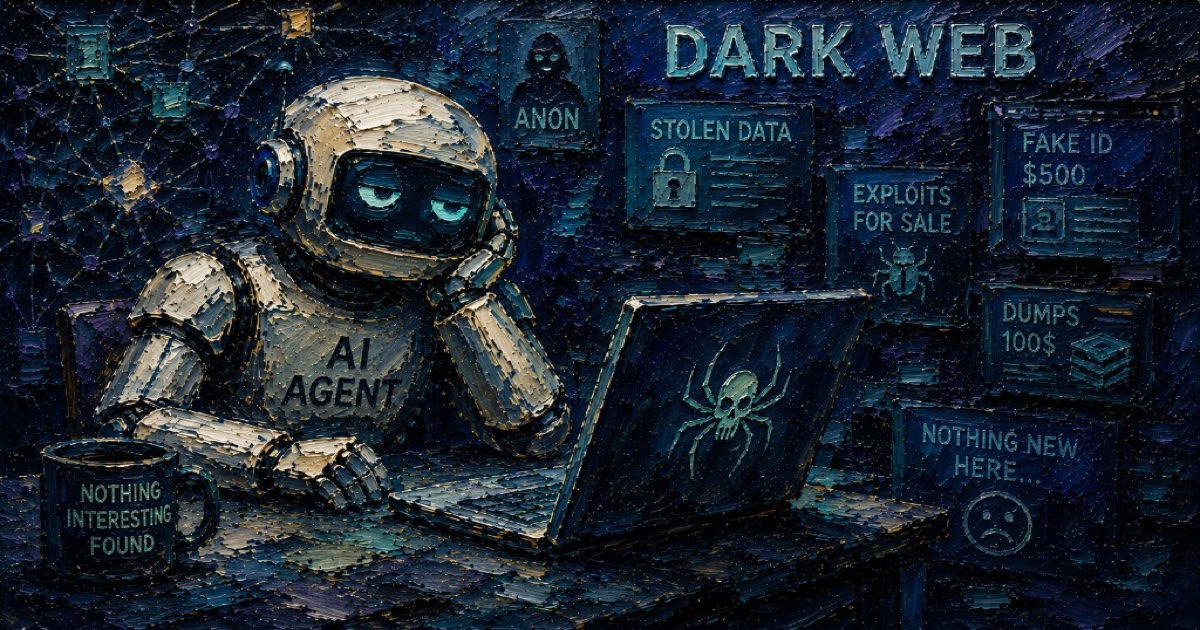
Over time, "dark web monitoring" got stretched into a broader threat intelligence posture, one that implied coverage, early warning, and proactive defense. None of that was accurate. The dark web is where attackers sell results. It's where stolen data gets monetized, where access brokers post after the breach has already happened, where ransomware groups publish proof-of-compromise to pressure victims into paying.
By the time something surfaces on a forum, the window prevention is closed. You're reading a receipt, not an early warning.
The Signal-to-Noise Problem Is a Business Model Problem
The commoditization of dark web monitoring created a perverse incentive: more coverage, more alerts, more forum access looked like more value. Vendors competed on breadth. Feeds scaled to include thousands of sources because larger coverage looked better on a comparison matrix.
What it produced was volume, not signal.
Analysts started seeing recycled credential dumps repackaged and reposted across dozens of forums. Aged breach data resurfacing years after the original incident. Alerts on domains that appeared in a paste with no attribution, no context, no indication of relevance to their organization. The alert queue grew. The actionable fraction shrank.
This is the signal-to-noise collapse, and it's not a failure of execution. It's what happens when the metric is coverage instead of precision.
What It Never Could See
Here's the harder problem: even a perfectly tuned dark web monitoring program would miss the most important part of the threat timeline.
Adversary infrastructure doesn't get assembled on the dark web. Domains get registered through standard registrars. Certificates get issued through public CAs. Hosting gets provisioned through legitimate cloud providers. C2 configurations get built, tested, and staged on infrastructure that looks unremarkable until it doesn't.
None of that activity happens on a forum. The pre-attack window, the period where a threat actor is preparing infrastructure before executing, is completely invisible to dark web monitoring by design.
What you're monitoring on the dark web is the aftermath. The planning phase was always somewhere else.
The Attribution Gap Nobody Talks About
Even when dark web monitoring surfaces something real, acting on it is harder than most vendors acknowledge.
A credential dump tells you accounts were compromised. It rarely tells you which threat actor acquired them, how they intend to use them, or whether your organization is in scope for their next move. A forum post about a new phishing kit tells you the kit exists, not whether the infrastructure to deploy it has been provisioned, not who's deploying it, not whether the domains they registered are pointing at your login portal.
Attribution without infrastructure context is a hypothesis. And hypotheses don't drive effective responses.
Where Sophisticated Actors Actually Operate
The adversaries worth worrying about most aren't posting on dark web forums. They probably never were.
Nation-state actors and advanced threat groups conduct their planning through private channels, encrypted communications, and infrastructure that doesn't generate forum traffic. The dark web intelligence economy is built largely around cybercriminal operations - credential theft, fraud, and lower-sophistication ransomware. High-capability adversaries doing targeted intrusion aren't advertising their operations on paste sites.
This doesn't mean dark web monitoring has zero value. It means the threat model it covers is specific - and organizations treating it as broad-spectrum threat intelligence have a coverage assumption problem they may not be aware of.
The Gap That Stays Hidden
The real danger of dark web monitoring isn't that it provides no signal. It's that it provides some signal - enough to feel coverage, not enough to actually be coverage.
Security teams that have invested heavily in dark web tooling often have a detailed view of one layer of the threat landscape: the after-market for stolen data. What they typically lack is visibility into the layer that precedes it, the infrastructure assembly, domain registration patterns, and adversary staging activity that occurs before a campaign launches.
That's the gap. And it stays hidden precisely because the alerts keep coming.
The Shift That Changes the Calculation
The teams moving ahead of this aren't abandoning intelligence programs. They're redirecting where those programs look.
The pre-attack window is observable, but not on the dark web. It's visible through adversary infrastructure signals: newly registered domains with specific registration patterns, certificate issuances that cluster with known actor behavior, hosting choices that correlate with previous campaigns. That's where the timing advantage lives. That's the layer that gives you enough runway to actually do something.
Dark web monitoring tells you what happened. Infrastructure intelligence tells you what's being built. Those are different intelligence problems, and only one of them gives you time to act.
It's not a question of whether the dark web matters. It does. The better question is whether your program is set up to stop what you care about, and whether the signals you're following show up before an attack starts or only after it's already underway.